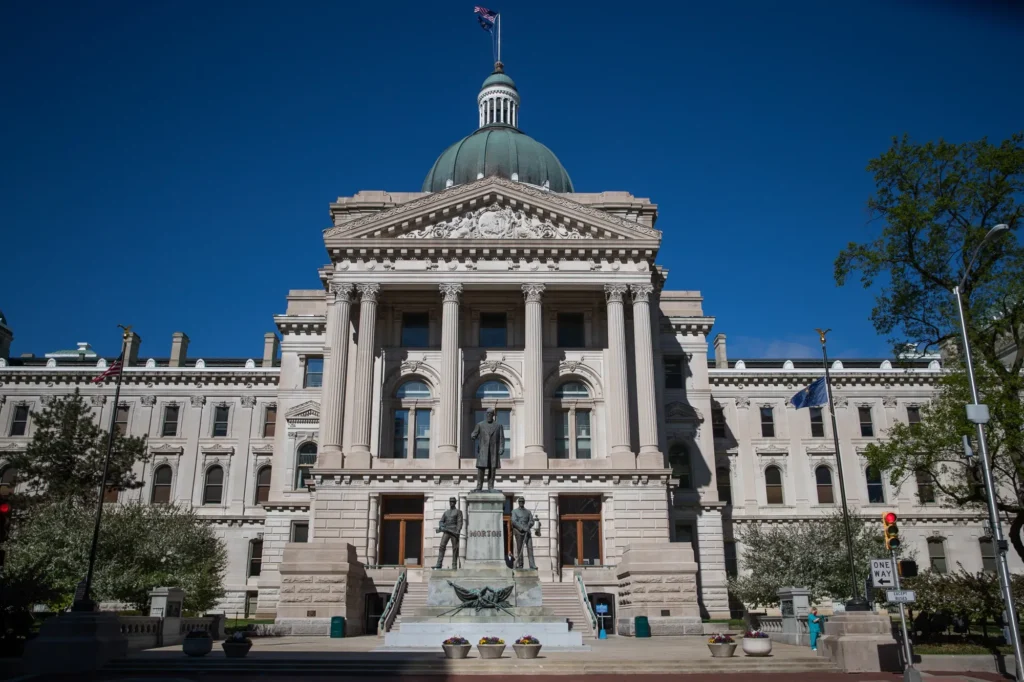
Indiana’s transformation from a small frontier territory to a vibrant state is a story of vision, determination, and resilience. The Indiana State Capital stands as a symbol of this journey, reflecting the state’s dedication to democracy, progress, and civic pride.
From Frontier Outpost to Government Center
In the early 1800s, as Indiana prepared for statehood, it required a central government location. Corydon, a small town in southern Indiana, was selected as the first state capital, providing a foundation for governance and civic development.
Constitutional Convention Under the Elm Tree
June 1816 marked a historic moment when 43 delegates gathered beneath the “Constitution Elm” to draft Indiana’s first constitution. This document set the stage for democratic governance and shaped the state’s future.
First Statehouse: Limestone Beginnings
During this period, workers constructed Indiana’s first statehouse, a 40-foot square building made from local limestone and timber. Completed in 1816, it witnessed Indiana becoming the 19th state on December 11, 1816, marking a pivotal moment in American history.
Capital Moves to Indianapolis
As Indiana expanded, a more central capital became necessary. In 1825, the state capital moved to the newly planned city of Indianapolis. The first Indianapolis statehouse, completed in 1835, took inspiration from the Greek Parthenon, showcasing Indiana’s aspirations.
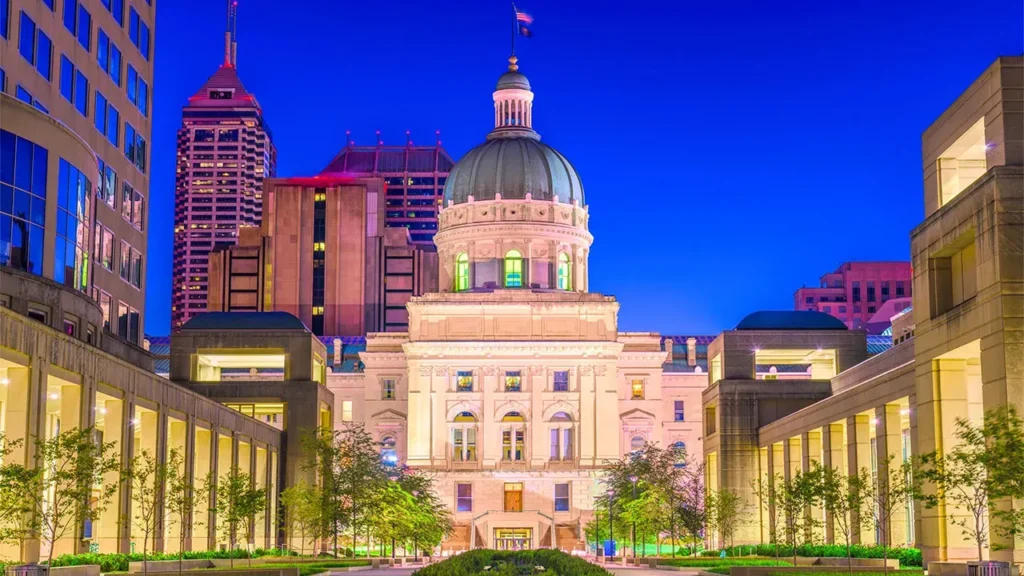
In 1888, the current Italian Renaissance-style statehouse, designed by architect Edwin May, opened its doors. Constructed using Indiana oak and limestone, it houses the governor’s office, the State Senate, House of Representatives, and Supreme Court, continuing to serve as the heart of Indiana’s government today.
Planning a road trip across the US? Check our detailed guide: “List of States in USA” to explore the diverse landscapes and landmarks of each state.
Preserving Indiana’s Civic Heritage
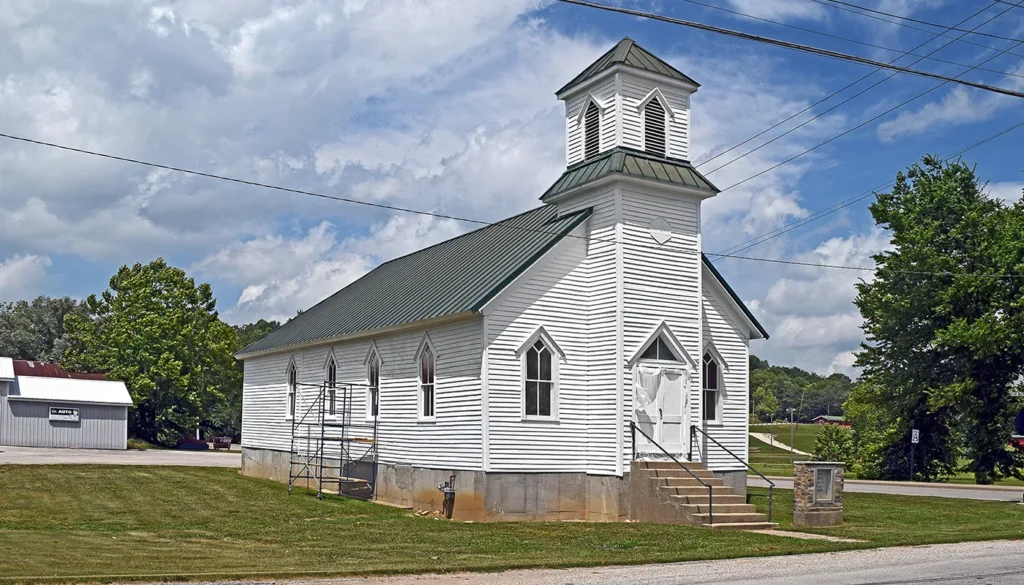
Although the capital moved, Indiana’s early civic landmarks remain preserved. Visitors to Corydon can explore the original state capitol building and the Constitution Elm, witnessing the birthplace of Indiana’s statehood. Additional historical sites, including the Governor’s Headquarters and Porter Law Office, provide insight into the lives of Indiana’s pioneering leaders.
Traditions, Symbols, and Civic Pride
The statehouse is rich in traditions and symbolism. Its stained glass rotunda, crafted by German artisans, bathes the halls in colorful light, representing the state’s historical and cultural values. Indiana’s official symbols, such as the cardinal (state bird) and the torch on the grounds, echo the spirit of the Hoosier state. Annual celebrations like Statehood Day and the Indiana State Fair highlight Indiana’s vibrant heritage and civic engagement (learn more about Indiana symbols).
Symbol of Democracy and Progress
The Indiana State Capital embodies democracy, progress, and innovation. Here, elected representatives convene to legislate, uphold democratic values, and drive economic growth. Educational programs, cultural events, and historical exhibits at the statehouse invite both residents and visitors to engage with Indiana’s past, present, and future.
Extra 2026 Experiences for Visitors
New in 2026, visitors can explore enhanced experiences at the Indiana State Capital and surrounding historic sites:
- Interactive digital tours highlighting Indiana’s legislative process.
- Heritage walks through Indianapolis showcasing historic architecture and civic landmarks.
- Special exhibitions on Indiana’s role in US history and innovation.
- Family-friendly educational programs focusing on democracy and local government.
Conclusion
Visiting the Indiana State Capital provides a window into the state’s history, culture, and civic values. From Corydon’s humble beginnings to Indianapolis’ grand statehouse, Indiana’s journey reflects resilience, vision, and a strong community spirit. Whether exploring historical sites or attending civic events, visitors gain insight into the heart of the Hoosier state.
FAQs about the Indiana State Capital
What is the Indiana State Capital?
The Indiana State Capital is the building where the state government operates. Located in Indianapolis, it houses the governor’s office, State Senate, House of Representatives, and Supreme Court.
Where was Indiana’s first state capital?
Indiana’s first state capital was in Corydon, a small southern town, from 1816 to 1825.
Why was the capital moved to Indianapolis?
The capital moved to Indianapolis in 1825 for a central location, making it accessible to people across the growing state.
What is unique about the current statehouse?
The current statehouse, completed in 1888, is an Italian Renaissance-style structure built with Indiana oak and limestone. Its stained glass rotunda and architectural grandeur symbolize the state’s history and progress.
Can visitors tour the Indiana State Capital?
Yes. Visitors can explore historical exhibits, participate in educational programs, and enjoy guided tours highlighting Indiana’s government and heritage.